"O brave new world"…
The seismic shift in the way educational materials are developed and distributed, continues apace. Sophisticated personal electronic devices are ubiquitous. Web speed and access are increasing all the time. So, consumption and delivery of educational content must continue to adapt.
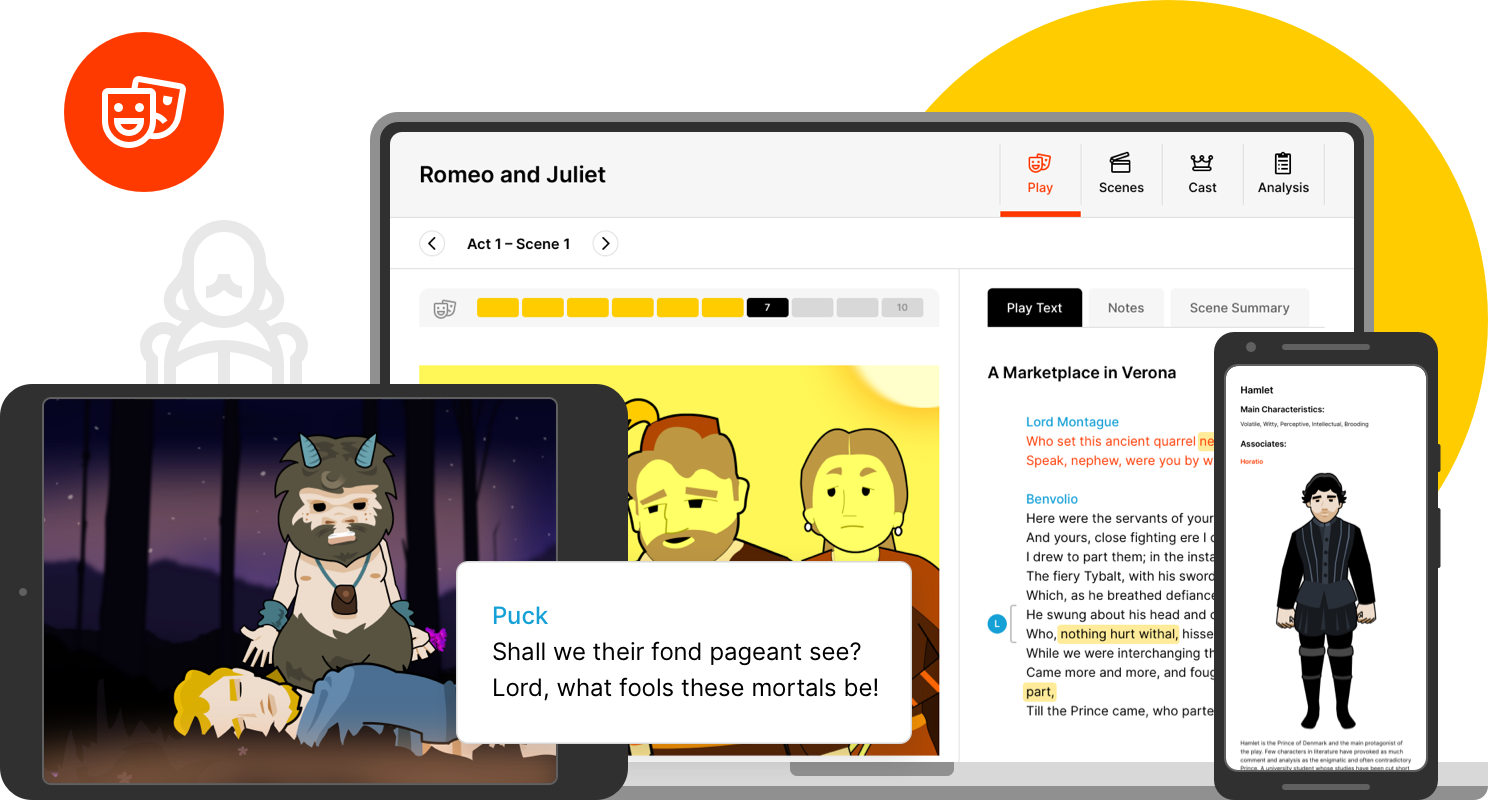
In this context, the most efficient and economical way to maintain and upgrade our product, with minimum disruption to users, is via a cloud-based platform. Therefore, Shakespeare In Bits will be available exclusively as an online subscription service going forward. This will allow us to deliver a consistent end-user experience, administer the service efficiently and provide the resources cost-effectively to you, the user.
To all our customers, thank you for your continued support for Shakespeare In Bits. The overwhelmingly positive feedback we have received to date has been rewarding and encouraging. We look forward to expanding and upgrading the product further in the coming years to make it an even more indispensable resource for the study of Shakespeare's great plays!
Your Humble Servants,
The Shakespeare In Bits Team